
Best AI Tools for Shopify in 2026 — Picks and Honorary Mentions
 Frank Yang - Sep 20, 2026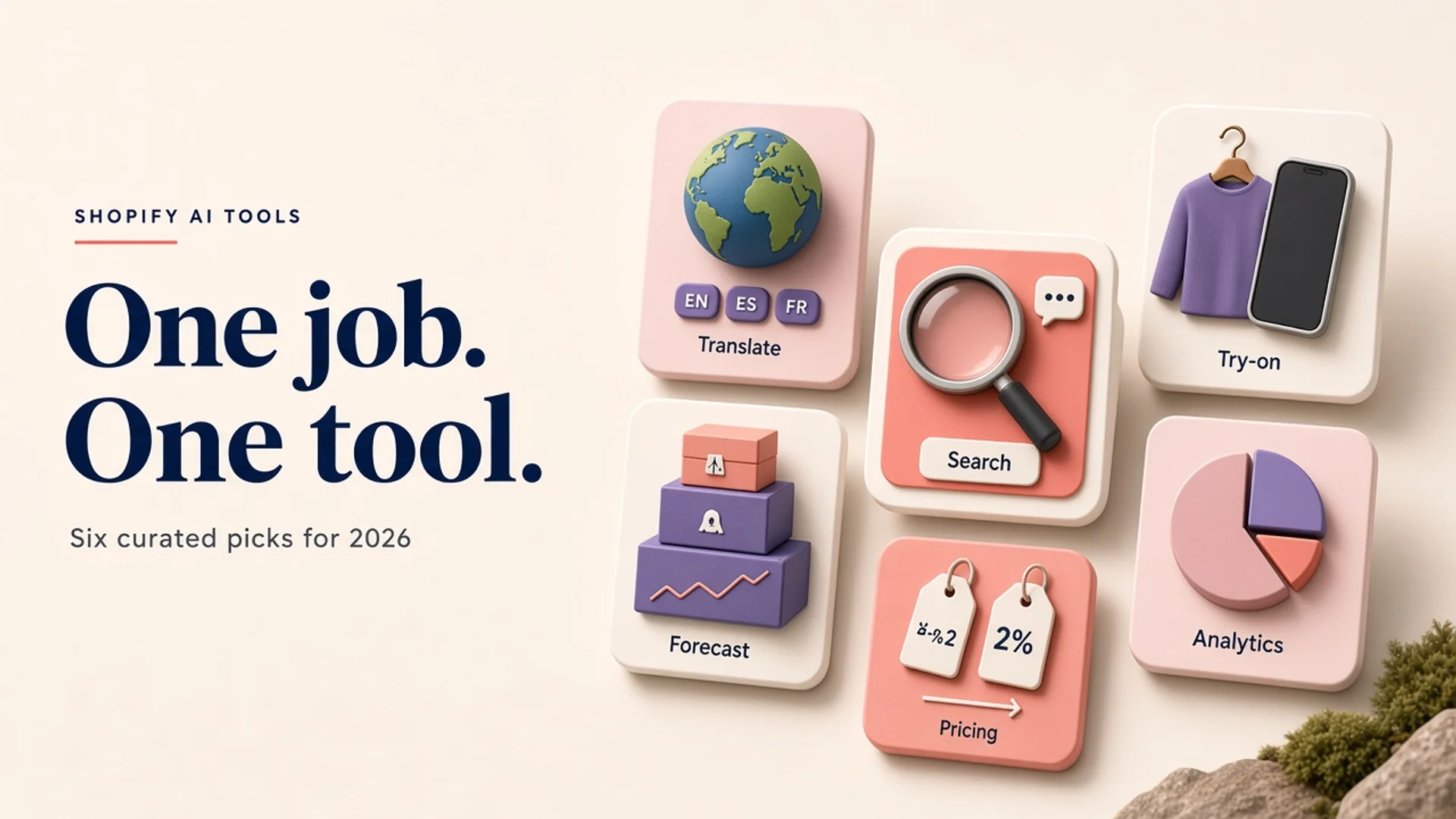
The best AI tools for Shopify in 2026 are the ones that own a single expensive job: help shoppers find and buy through AI search and chat, translate a catalog, let shoppers virtually try on apparel, forecast replenishment, watch competitor prices, or audit revenue leaks in plain English.
Updated September 2026. I have installed and run each tool on this list on our own Shopify stores, not from a product tour alone. Depth varies by how long each app has been in our stack, but every pick had to clear four bars before it stayed:
- AI is the product, not a late add-on. The core workflow depends on a model, forecast, matcher, or analyst, not a renamed spreadsheet.
- Shopify-native install path. Admin install, Shopify Markets or catalog sync, and a storefront or ops screen we could turn on without a custom app build.
- A result we could inspect in under a week. Shoppers finding products via natural-language search or chat, translated products live, a try-on preview on a product page, a forecast that changed a purchase order, a price match we could verify, or an answer that named a real leak in our data.
- A clear job boundary. One category, one primary tool. Multi-job suites got cut, except Shoply, where search and chat are one shopping-assistant job.
For deeper head-to-head comparisons on discovery apps alone, see the AI search comparison and chatbot guide. For tools that leave an inspectable action behind, see Shopify AI tools that take action.
| Category | Primary pick | What AI actually does | When it fits |
|---|---|---|---|
| AI shopping assistant | Shoply | AI search plus AI chat on live catalog data | Strong: discovery and answers in one surface |
| Translation | Lokalize | Bulk-translates with GPT, DeepL, DeepSeek | Good: AI engines plus glossary control |
| AI virtual try-on | Torziva | Maps a garment onto the shopper’s own photo | Strong: visualization, not size prediction |
| Inventory forecasting | Prediko | Demand forecast plus what, when, and how much to buy | Strong: forecast drives the buying workflow |
| Pricing | Intelis | AI product match and competitor price monitor | Qualified: intelligence first, automation second |
| Analytics | Lolipop | Cross-source analyst answers in plain English | Strong: the AI analyst is the main interface |
Read the category that matches the failure costing you the most money this quarter. Honorary mentions are runners-up for the same job, not a second install in the same sprint.
Best AI shopping assistant (search + chat): Shoply
Keyword search boxes fail when shoppers type like humans: “waterproof men’s jacket under $120” or “do you have this in size M ship to Berlin?” Native Shopify search matches strings. Shoply AI Search & Chatbot puts AI search and AI chat in one app so discovery and follow-up questions share the same catalog context. It matches customer queries with products by both keywords and semantic meaning, then ranks with 14 factors such as product details, shopper behavior, sales, stock, and availability before Shoply’s fine-tuned LLM checks the shortlist for final relevance (how Shoply ranks search results). Free plan available; paid plans start at $49.99/month. Try the live path on the Shoply demo store .
This is the storefront layer, not an ops dashboard. Choose it when paid traffic lands on a catalog shoppers cannot navigate, or when pre-sale questions clog support.
For search-only and chatbot-only comparisons, use the AI search and chatbot guides; this list keeps one primary pick for the combined shopping-assistant job.
Honorary mentions: Chatty AI when you mainly want a support chatbot, and Boost AI Search & Filter when filters and facet search are the sharper need than conversational answers.
Best AI tool for translation and localization: Lokalize
International traffic that lands on English-only product pages is a conversion leak, not a branding win. Lokalize bulk-translates products, pages, blogs, custom product fields (metafields), and URL handles using GPT, DeepL, DeepSeek, and related engines, with glossary rules so brand names stay stable. Plans start free (2 AI languages, 10,000 one-time words) and scale to paid tiers with auto-translation of new catalog changes.

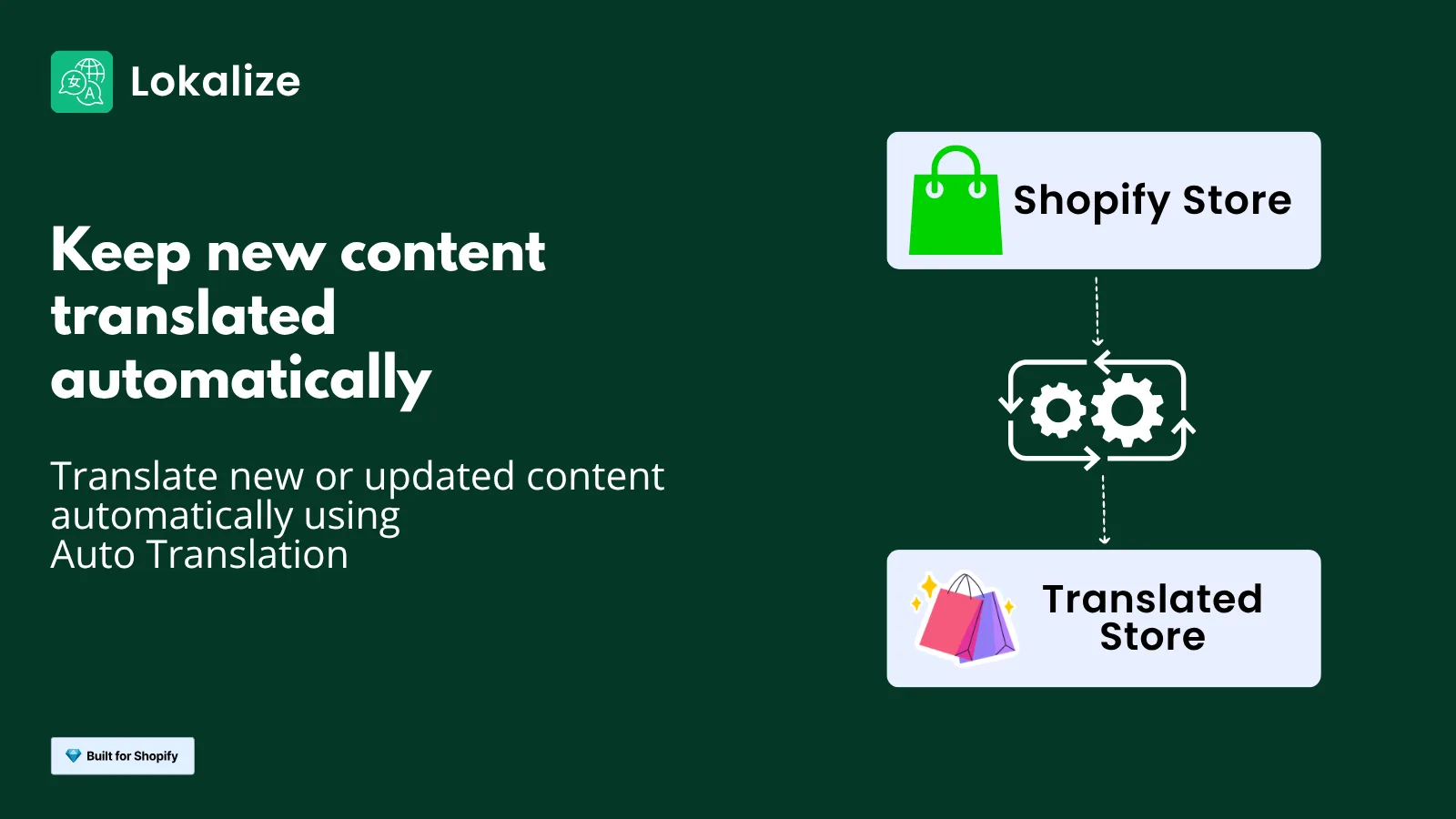
Machine translation still needs glossary discipline on size labels, materials, and legal copy. Lokalize earns the slot when bulk speed plus engine choice matter more than a managed localization agency. If shoppers then chat in that language, pair it with a multilingual chatbot; Shoply’s 23+ language runtime covers that storefront half.
Honorary mentions: LangShop for deeper Shopify Markets and glossary controls, and Transcy when you want AI translation plus currency switching in one install.
Best AI tool for virtual try-on: Torziva
Product photos show a model. Shoppers still wonder how the jacket or dress will look on them. Torziva adds a try-on button to product pages: the shopper uploads one photo, and generative AI drapes the garment on their body using the catalog images you already have. No 3D modeling or reshoots.
Setup felt merchant-light: we got the Shopify widget live in under five minutes without a developer, it worked with existing catalog photos, and stayed theme-agnostic without a page-speed hit. From what we saw, photos are processed in real time and discarded—we did not observe Torziva storing, sharing, or selling biometric data (GDPR/CCPA). On outcomes, merchants we looked at saw about a 40% drop in size-related returns and roughly 2.3× higher add-to-cart rates when shoppers could preview fit before buying. Shopify App Store pricing starts free (10 try-ons/month) and scales from $19/month for 100 try-ons.

Honorary mentions: GenLook for selfie try-on plus email capture, Antla and MirrAR as other apparel visualization options, and Sizekick when the expensive failure is wrong-size returns rather than visual mismatch.
Best AI tool for inventory forecasting and replenishment: Prediko
A sold-out bestseller is not a marketing problem. Prediko forecasts demand from sales history, seasonality, and growth assumptions, then recommends what, when, and how much to purchase through restock alerts and purchase-order workflows. Starter pricing is $49/month for stores up to about $100k in revenue, with higher-revenue plans above that.
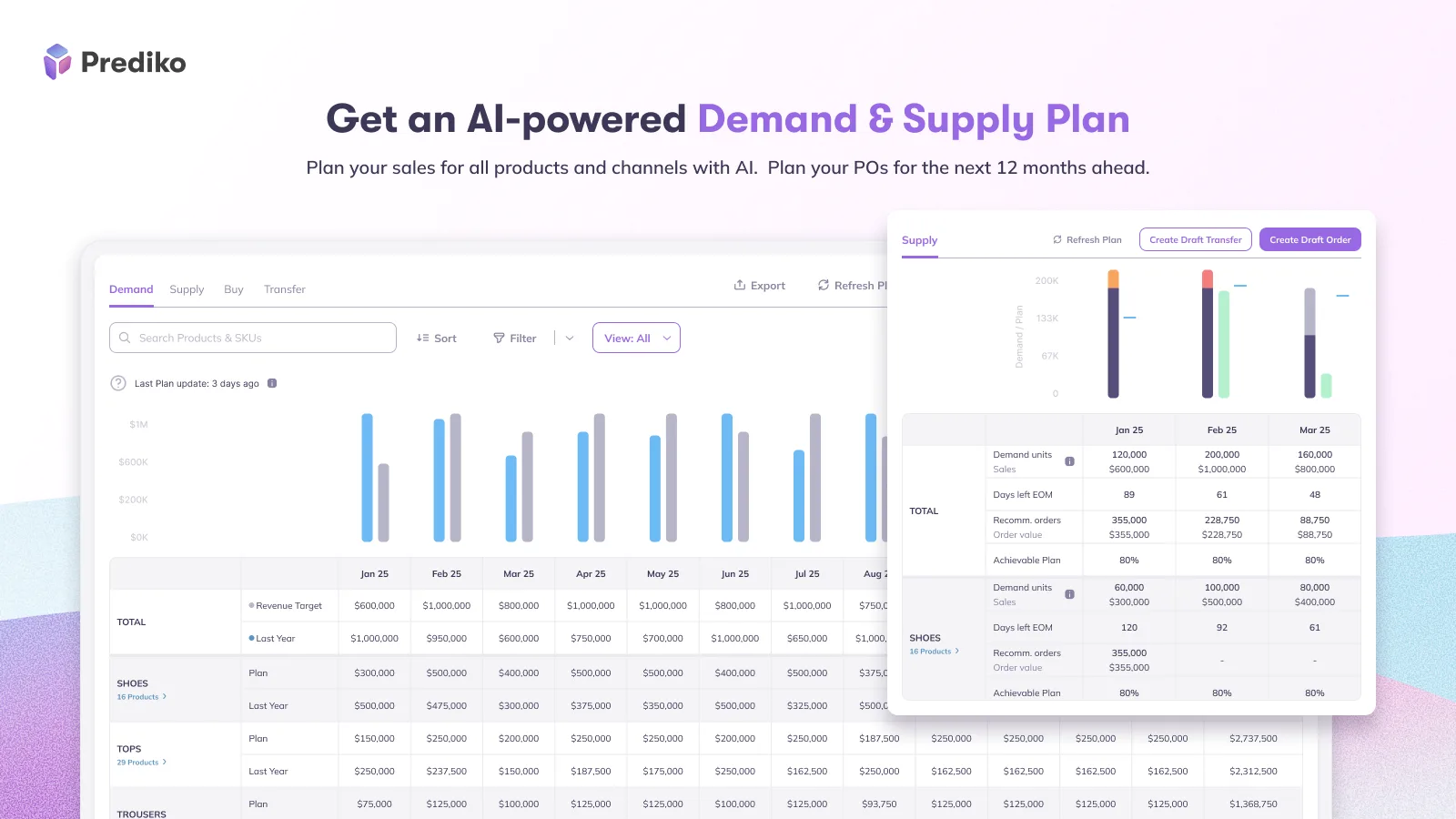
Forecast quality still depends on clean sales history and honest lead times. Prediko drafts the buying decision; a person still owns cash and supplier risk. Wrong inventory data also breaks every storefront promise, including live-stock answers from Shoply AI on large catalogs.
Honorary mentions: Assisty for AI demand planning and purchase orders on a similar path, and Sumtracker when multi-store stock sync is the sharper pain than forecasting.
Best AI tool for pricing and discount optimization: Intelis
Static prices lose when Google Shopping competitors move daily. Intelis uses AI to match your products to competitors, monitors Google Shopping and direct competitor URLs, and supports dynamic pricing rules. Basic plan starts at $49/month for up to 100 products or variants.
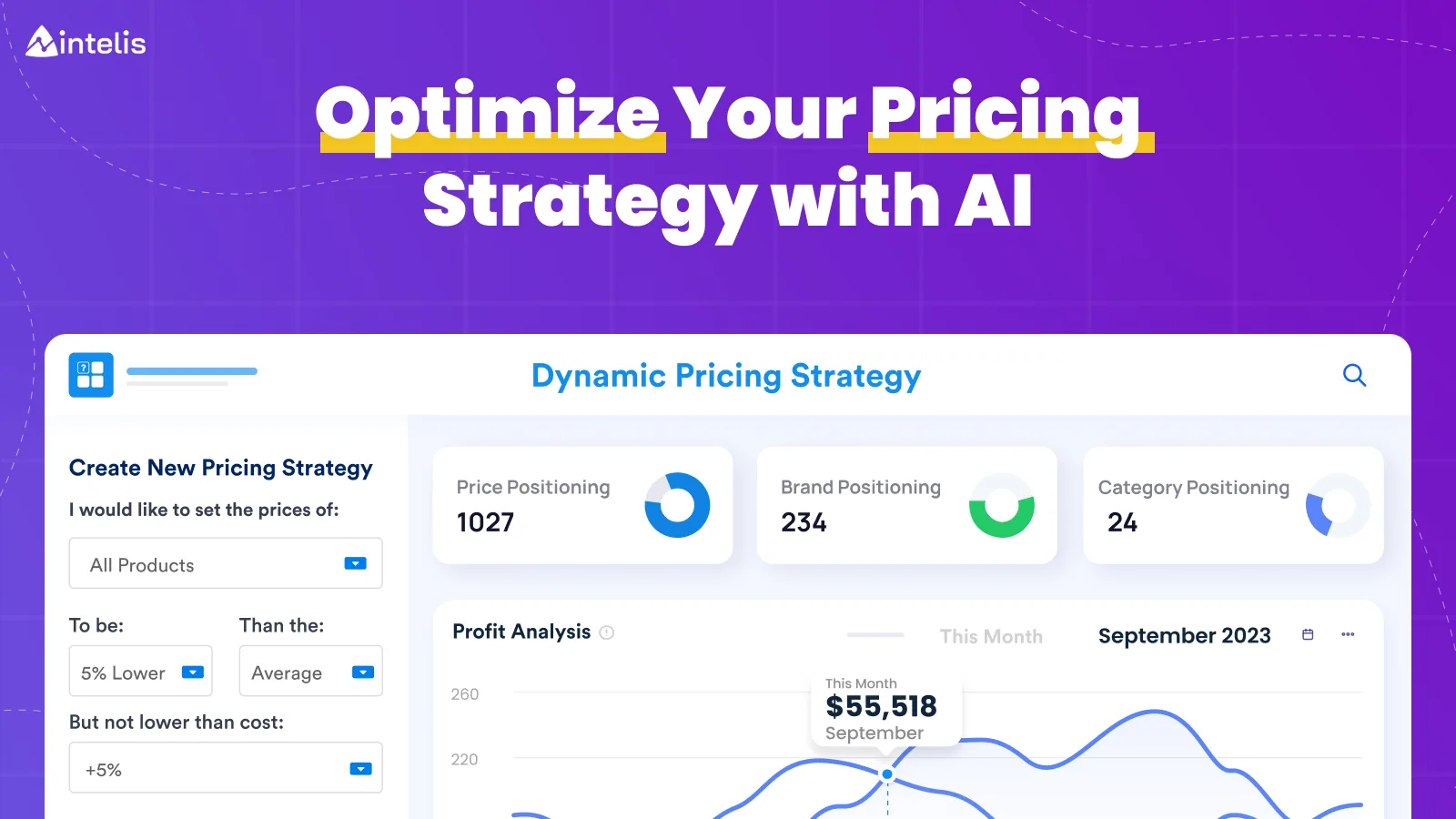
Treat Intelis as pricing intelligence with optional automation, not a promise that every product price is AI-decided. It fits large catalogs competing on Shopping ads better than personalized discount engines. For the shopper-facing half (why this price, why this variant), keep discovery tools that read live price and stock; see how to automate the Shopify storefront.
Honorary mentions: Prisync for competitor monitoring and dynamic pricing, and Pricefy when you want a lighter AI repricer focused on the same job.
Best AI tool for analytics and business insights: Lolipop
Dashboards report that revenue fell. Merchants need the next sentence. Lolipop is an AI analyst: connect Shopify plus Google Analytics, Search Console, Meta, Google Ads, and Klaviyo, then ask questions in plain English. In our testing, it named concrete catches such as failed payment methods, broken tracking, and JavaScript crashes eating paid traffic.
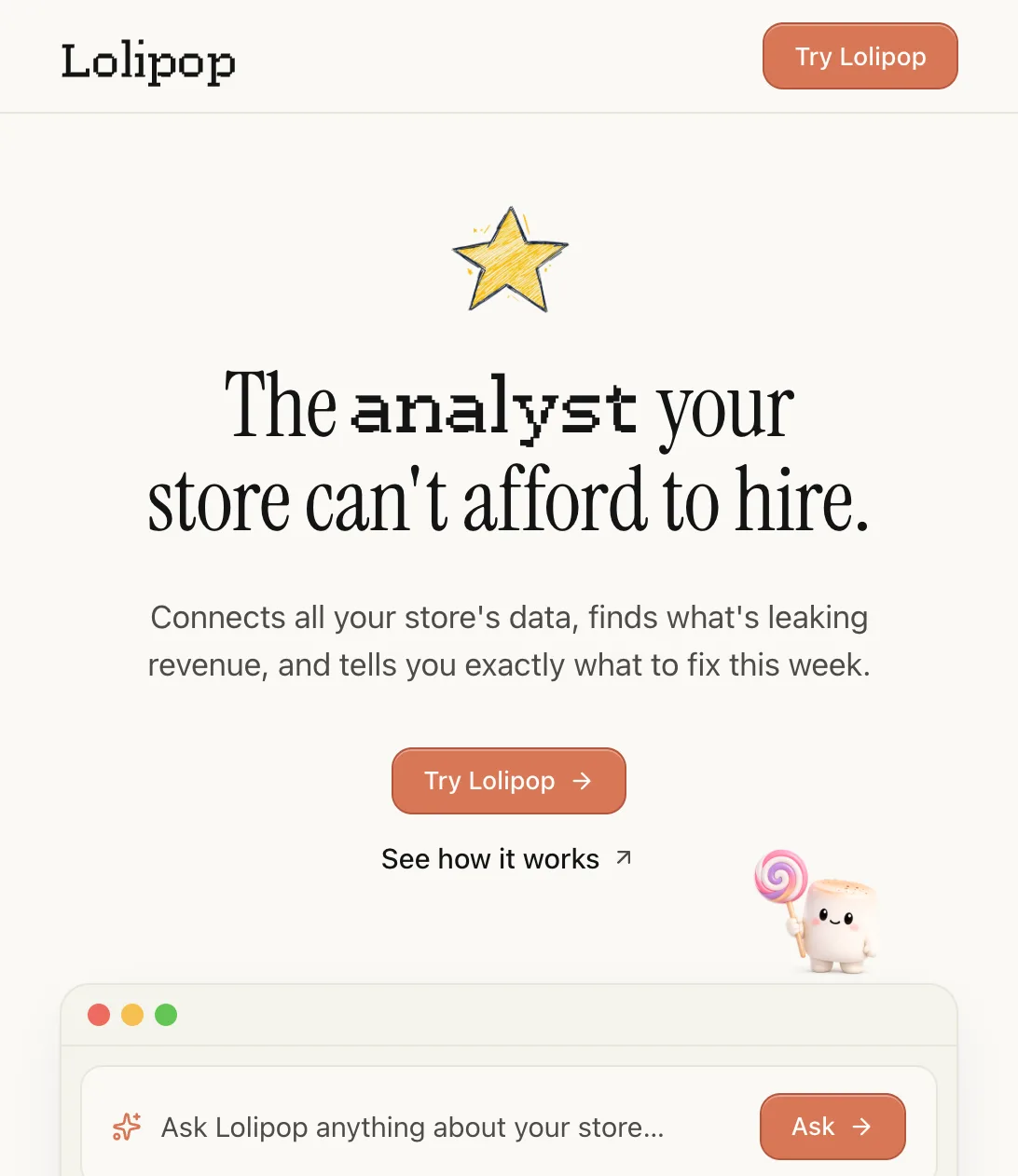
It stays on this list because the product is an analyst, not another dashboard. On-site search logs remain a separate signal; auditing Shopify site search still catches catalog gaps no ad dashboard will name.
Honorary mentions: Triple Whale for attribution-heavy ecommerce analytics, and Microsoft Clarity when session recordings and heatmaps are enough before you need a chat-style analyst.
How to pick one category this quarter
Buy the tool that removes the most expensive repeated failure, not the longest feature list. Rank failures by weekly cash you lose (refunds, stockouts, wasted ad spend, bounced international sessions), not by how impressive a demo looks. Install one primary pick, measure for two to four weeks, then decide whether a second category is still worth the attention.
Concrete failure → pick pairings:
- Search bounce or repetitive pre-sale questions. Before: keyword search returns nothing useful; agents answer stock and size all day. After: Shoply search and chat answer from live catalog data in one surface (why search and chat belong together).
- Non-English traffic on English-only product pages. Before: bounce and zero add-to-cart in that market. After: Lokalize ships translated catalog and SEO fields.
- Apparel returns that say “didn’t look like I expected.” Before: model photos only. After: Torziva shows the garment on the shopper’s photo.
- Bestsellers stock out while cash sits in slow movers. Before: gut-feel purchase orders. After: Prediko turns demand history into what, when, and how much to buy.
- Shopping competitors undercut you daily. Before: static prices and late margin surprises. After: Intelis matches products and surfaces competitor moves.
- Revenue drops and dashboards only restate the drop. Before: more charts, no next step. After: Lolipop names a concrete leak in plain English.
If two failures cost about the same, start with the one you can verify inside a week (a live search answer, a translated product, a try-on on a product page, a forecast that changed a purchase order). Skip stacking five AI apps in one sprint. Unfinished installs never remove the failure.